
The Desert of Forbidden Art
2011 · 80 MIN · IMDB 7.6 · 238 VOTES · DIR. Amanda Pope, Tchavdar Georgiev
Overview
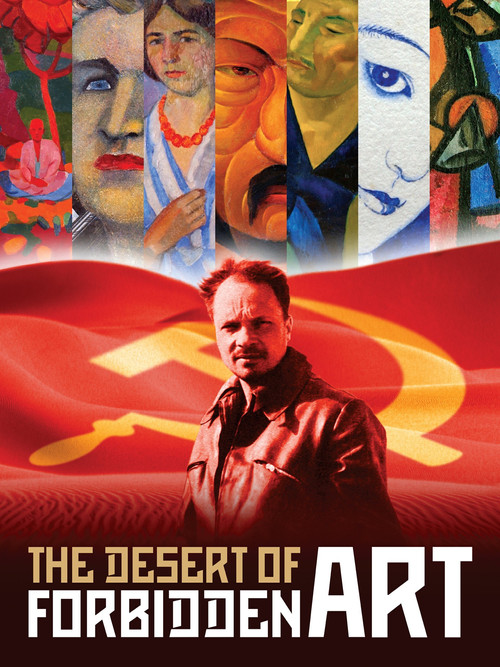
How does art survive in a time of oppression? During the Soviet rule artists who stay true to their vision are executed, sent to mental hospitals or Gulags. Their plight inspires young Igor Savitsky. He pretends to buy state-approved art but instead daringly rescues 40,000 forbidden fellow artist's works and creates a museum in the desert of Uzbekistan, far from the watchful eyes of the KGB. Though a penniless artist himself, he cajoles the cash to pay for the art from the same authorities who are banning it. Savitsky amasses an eclectic mix of Russian Avant-Garde art. But his greatest discovery is an unknown school of artists who settle in Uzbekistan after the Russian revolution of 1917, encountering a unique Islamic culture, as exotic to them as Tahiti was for Gauguin. They develop a startlingly original style, fusing European modernism with centuries-old Eastern traditions.
Dialogue Timeline — 557 lines
A SAMPLE ACROSS THE RUNTIME — EVERY LINE IS SEARCHABLE
00:00:56 Savitsky: I found these paintings
00:03:55 For those people who consider Uzbekistan to be
00:05:54 The little girl with the bow is me, groomed in
00:07:37 sense of freedom.
00:12:23 Marinika: This is the classical costume of Karakalpak
00:15:44 Around that time I came across an art catolog
00:18:58 He couldn't understand why would a Russian artist
00:21:04 He was the master of these things.
00:25:02 of water was just lost, and they sucked this water
00:29:38 like a microbe from the healthy body.
00:31:19 He was studying icon painting.
00:33:50 Kurzin's workers bear a striking resemblence
00:36:22 Male voiceover: Witness Alexander Nicolaevich.
00:40:34 He was to persuade them to give money to the
00:42:24 My father was saying, "Oh, one day you will
00:48:30 He was awarded many state prizes.
00:50:58 Van Gogh, Gauguin, and Seurat.
00:56:54 Elena: For me Karakalpaks are invented creatures
01:01:32 but those state subsidies were meant to be used for
01:06:06 When Savitsky came to me and said
01:07:45 This means danger for our collection.
01:09:20 There were going to be a lot of people choking
01:10:41 I said, "What?"
01:16:41 Their works are the physical expression of a