
Surviving Progress
2011 · 86 MIN · IMDB 7.4 · 1,909 VOTES · DIR. Mathieu Roy, Harold Crooks
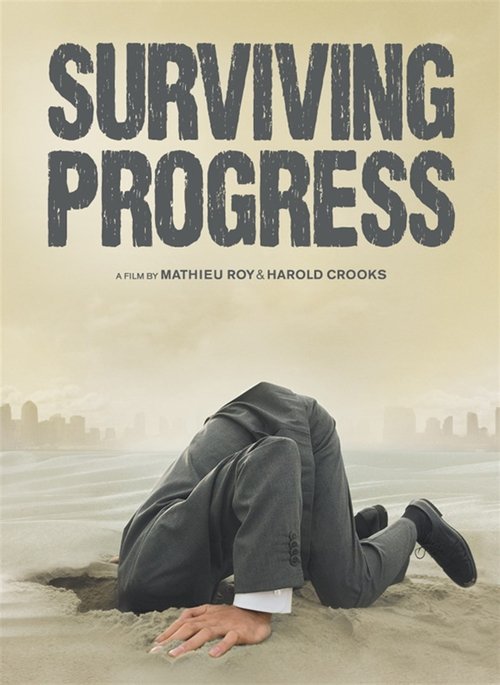
Overview
Humanity’s ascent is often measured by the speed of progress. But what if progress is actually spiraling us downwards, towards collapse? Ronald Wright, whose best-seller, “A Short History Of Progress” inspired “Surviving Progress”, shows how past civilizations were destroyed by “progress traps”—alluring technologies and belief systems that serve immediate needs, but ransom the future. As pressure on the world’s resources accelerates and financial elites bankrupt nations, can our globally-entwined civilization escape a final, catastrophic progress trap? With potent images and illuminating insights from thinkers who have probed our genes, our brains, and our social behaviour, this requiem to progress-as-usual also poses a challenge: to prove that making apes smarter isn’t an evolutionary dead-end.
Dialogue Timeline — 649 lines
A SAMPLE ACROSS THE RUNTIME — EVERY LINE IS SEARCHABLE
00:00:08 Surviving progress
00:07:25 One example would be going right back to the old stone age
00:10:11 And so most of what we do, we do with hardware components
00:12:35 That's the fundamental, core difference, I belive, between humans and chimps
00:15:39 'Why?'
00:18:04 The other side of this problem
00:27:04 which is the clean air and clean water
00:30:39 If you are watching the earth over the last 5 or 6 thousands of years
00:33:29 This was easy to do in a society when most debts were owed to the state
00:35:39 What was absolutly new in a Roman Empire was irreversible concentration of wealth at the top of economic pyramid
00:38:18 and to collapsse. And the more that reasonable, responsible people at the center and the left and the right
00:40:38 They would rather annule the bottom 90% right to live then to annule the money thats due to them
00:43:46 What is interesitng is all the money and plunder from all iternational debt
00:47:23 and private investors bought these resources on credit.
00:56:28 where do you put topsoil or biodiversity, their answer is:
00:59:12 and when the cities are spreading out
01:02:47 but to spread out into space
01:05:44 and going into deliberate design of species for our own survival
01:08:28 have been driven over the last 200 years by a system of overproduction of stuff
01:10:35 allows us to use desert land mhm.. we just need sunlight and CO2
01:12:29 But we don't need one-and-a-half ton car to go from red light to red light
01:16:02 that my lifestyle requires a huge amount of resources too, so how can I blame other people
01:18:23 THA PLANETARY BRAIN
01:23:07 subtitles by 'strg'